Health and Safety in Events

This post will look at Health and Safety in events and risk management.

The Event Management Body of Knowledge (EMBOK), identifies risk management as one of the main knowledge domains necessary for the management of a successful event.

Image

Bowdin et al 2011 states that the definition of event risk is ‘any future incident that will negatively influence the event’. This means that if an incident such as lack of crowd control or an accident happened, the event would not only have negative press but consumers would not come back to future events. It is important to manage risk as it can reduce unexpected and costly surprises such as a customer deciding to sue the event after an accident.

The Event Safety Guide seperates events into 5 different phases:

  • Build up,
  • Load in,
  • Show,
  • Load out,
  • Break down.

This is a technical approach and goes through the stages of the event step by step.

However Berlonghi (1990), categorises the main areas of risk as:

  • Administration – office layout should pose minimal risk to employees,
  • Marketing and Public Relations – the promotion section of the company must be aware of potential risks and not just ignore them to avoid bad press,
  • Health and Safety – the main area of risk management. Loss prevention plans and safety control plans. Or taking into consideration specific event risks such as catering at a food and drink event,
  • Crowd Management – monitoring crowd flow, ingress and egress, alcohol sales and noise control,
  • Security –  security plan including careful risk management thinking,
  • Transport – deliveries, parking and public transport contain hazards that need to be addressed.

However as this was published in 1999, this may be outdated and may not take into account modern day issues.

HSE also states that ‘The law does not expect you to eliminate all risk, but you are required to protect people as far as ‘reasonably practicable’. This emphasises the fact that it is impossible for event organisers to illuminate risks altogether but they can work to reduce them. This can be done through risk assessments, producing a risk matrix or creating a risk register and prioritising risks.

There are 5 steps to risk management:

  • Identify the hazard,
  • Decide who might be harmed and how,
  • Evaluate risks and decide on precautions,
  • Record your findings and implement them,
  • Review your assessments and update if necessary.

If these steps are followed correctly, it will be easier for event managers to make an event run smoothly.

Communication is a key part of managing risk at an event. Stewards, security and venue management are the main sources of communication during the event. If the crowd knows where to go and what is happening they are more likely to cooperate therefore reducing the risk of an accident, and leading to a successful event.


References.

Berlonghi, 1990, Special Event Risk Management Manual, Bookmasters, Mansfield, Ohio.

Bowdin et al, 2011, Events Management, Elsevier Ltd, Oxford.

Health and Safety Executive, 1999, The Event Safety Manual, HSE Books, Norwich.

www.embok.org (accessed on 10/12/12)

Sustainable Events

This post will look at London 2012 and cover the events industry approach to sustainable events.

11150_0000026ca_872e_olympic-logo

(Image taken from blog.marketing-soc.org.uk)
Concern for sustainability and consideration of the environmental impacts of events is increasing. UK Sport spoke about the development of The Commonwealth Games 2002, stating that there is need for ‘environmental sensitivity’ when putting on large special events such as this.

London 2012 was crucial in developing the new British Standard for Sustainable Event Management System (BS 8901) that provides a framework for managing events compliant with sustainability standards. BS 8901:2009 provides guidance for event organisers, venues and supply chains. It concentrates on managing environmental, economic and social impacts and risks.

It will:

  • Help companies to improve sustainable performance within available budgets,
  • Reduce carbon emission and waste
  • Present opportunities for efficient planning and encourage re-use of equipment and infrastructure.

(Bowdin et al 2011).

London 2012 head of sustainability David Stubbs claimed that the guidelines ‘will ensure that the games are arranged and run in the most sustainable way possible’.

The games itself included test events, torch relays, opening and closing ceremonies. Head of Market Development, Risk and Sustainability BSI British Standards Anne Hayes stated that the Olympic and Paralympic games will be as ‘sustainable as possible’.

Another term involved in this issue is ‘green events’. This generally refers to minimising the negative environmental impacts of events, such as carbon reduction and recycling. The first major events to adopt these principles were the FIFA World Cup, The Commonwealth Games and the Olympic Games. There were efforts made to reduce or offset greenhouse gases. This has been done by tree planting, use of ‘green’ energy and public transport strategies. (Manchester City Council 2006).

Building on the success of BS 8901, an international project known as ISO 20121 is being put forward to ‘harmonise the international events industry’s efforts for sustainable events and to set benchmarks for best practise’.

It seems as though the industry is finally getting behind the sustainability initiatives, and understanding the importance of keeping events green.

References.

Bowdin et al, 2011, Events Management, Elsevier Ltd, Oxford.

London 2012, 2009, London 2012 Publishes Sustainability Guidelines for Corporate and Public Events, Press Realise, 25 February, The London Organising Committee of the Olympic Games and Paralympic Games Limited, London.

Manchester City Council, 2006, A Guide to Greening Your Event, Manchester City Council Green City Team, Manchester.

UK Sport, 1999, A UK Strategy: Major Events – A Blueprint For Success, UK Sport, London.

http://blog.marketing-soc.org.uk/tag/london-2012-olympics/ (accessed on 10/12/12)

Victoria’s secret might be marketing..

As my last post was on the lighting at the annual Victoria’s Secret lingerie show, I thought I would take this case study a bit further and look at the marketing involved.

Image

The Chartered Institute of Marketing states that “Marketing is the management process that identifies, anticipates and satisfies customers needs profitably”. In the case of this fashion show, it is the companies chance to showcase the new designs and satisfy the needs of the consumers by televising the show.

The show has developed over the years and gets bigger and more creative each time. Matthews (2008) expresses the importance of creativity in events stating that it is ‘absolutely essential’, and ‘it is the event producer who ends up with the task of creating and designing an event from the ground up, incorporating everything from décor and entertainment to all the technical elements’.  The latest marketing tool being used in the show is allowing backstage access, explanations of each theme and interviews with the ‘angels’ themselves. This makes the audience feel involved and allows them to connect with the product and the brand as a whole.


Victoria’s Secret is an aspirational and lifestyle brand. Middleton (2001), states that todays society are ‘more quality conscious and generally more sophisticated consumers’. This means that although the lingerie may be pricey, consumers will be willing to pay more money to own a high class brand of underwear. Using famous celebrities such as Miranda Kerr (seen below) also endorses the brand and makes women everywhere aspire to be like them.

Image

(Image taken from herworldplus.com)

A furthur marketing tool Victoria’s Secret have used in this case is various competitions, including winning a trip to New York. This is another way to get the audience involved, and a successful way of creating a database for future promotions and events. Using e-marketing is another way that Victoria’s Secret have successfully branched out into a global brand. By streaming the fashion show online, they have successfully reached a wider audience as the show was not aired on any UK channels. The Victoria’s Secret official website also has videos of behind the scenes, and backgrounds and interviews with the main models used in the show. Bowdin et al (2011), states that when using a website as a marketing tool, the key to success is to ensure that the website is ‘simple and easy to use – in other words, that it is user-friendly’.

Victoria’s Secret has become one of the most famous lingerie brand in the world with over 1000 stores in USA and advertising campaigns that are seen around the globe. If you haven’t already seen the show I would highly recommend it! So we’ve always wanted to know what Victoria’s Secret is.. Maybe it’s simply great marketing.

References:

Bowdin et al, 2011, Events Management, Elsevier, Oxford.

Matthews, 2008, Special Event Production: The Process, Elsevier, Oxford.

Middleton, 2001, Marketing in Travel and Tourism, Butterworth-. Heinemann, Oxford.

http://www.cimhk.org.hk/ (accessed on 10/12/12)

http://vsallaccess.victoriassecret.com/news-events/ (accessed on 10/12/12)
http://www.herworldplus.com/celebs/updates/victoria%E2%80%99s-secret-show-opens-circus (accessed on 10/12/12)
Angels in lights

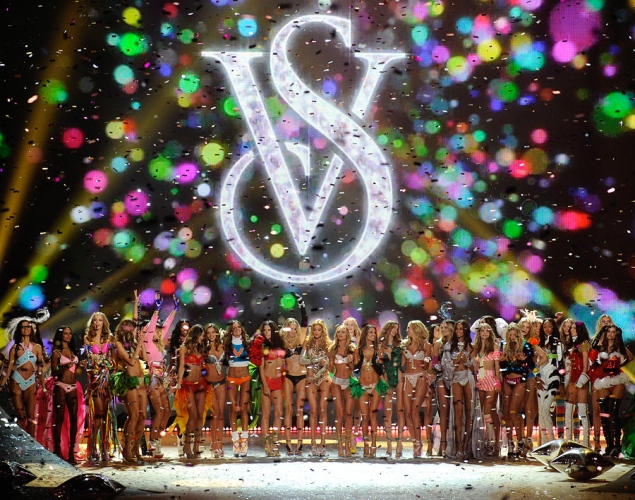
The Victoria’s Secret fashion show was one of the most talked about events this year. Filmed on 8th November in New York, the 2012 event featured Victoria Secret “Angels” Doutzen Kroes, Adriana Lima, Joan Smalls, Candice Swanepoel, Lily Aldrige, Erin Heatherton, among other models. This post will focus on the lighting and special effects seen in the show.

The show started with a circus theme, including acrobats hanging from the ceiling, then moved through a series of themes such as ‘calendar girls’, and ‘silver screen angels’. Not only were the costumes and models incredible, but the lighting and special effects made the show spectacular to watch.

Image

(Image taken from CBS news)

Bowdin et al (2011), states that lighting at a venue has 2 functions. Initially lights are there to allow the audience to see what is happening, and ‘artistically they are central to the design of the event’. Event lighting is one of the most important factors that need special attention to bring the atmosphere of the event to life. Bowdin also states that ‘the sound and lights must compliment the entertainment.’  In the case of this show, the event organisers used the lights to enhance the theme of the costumes. For example the ‘Pink’ section had pink lighting to match. The show had models walking down the runway and celebrities such as Rihanna performing simultaneously. This meant that spotlights and travelling lights had to be used to focus on both the models and performers. Reid (2001), states that when creating a light plan it is essential to decide the placement of the lights, type of lighting, where the light should be pointed and what colours to use. As you see in the picture below, Bruno Mars performed with strobe lighting behind him which was focused on the models entrance and exit.

Image

(Image taken from businessinsider.com)

The event safety guide states that ‘the electricity supply to the stage should be controlled by a switch or switches and installed in a position accessible at all times to authorised people in the staging area’.  This is important when considering an event such as this, as it is often busy and chaotic backstage, therefore if the lighting control was in the middle of this area it would be extremely difficult to get to if needed.

However the use of lights did not stop at the stage, they were also part of the costumes. In the picture below Erin Heatherton wears a circus themed costume complete with light up wings.

2012-victorias-secret-fashion-show_10

As the show had a budget of 12 million dollars, paying for the highest standard of health and safety was not an issue and it all ran smoothly – the angels will be flying for another year.

References:

Bowdin et al, 2007, Events Management, 2nd Ed, Elsevier, Butterworth-Heinemann, Oxford.

Reid, 2001, Staging Handbook, 2nd Ed, A&C Black, London.

http://www.businessinsider.com/photos-victorias-secret-fashion-show-2012-2012-12?op=1 (accessed on 09/12/12)

http://www.cbsnews.com/8301-207_162-57557217/victorias-secret-fashion-show-2012-a-night-of-fashion-and-music/ (accessed on 09/12/12)

http://EzineArticles.com/4341405 (accessed on 09/12/12) www.eventsafetyalliance.org/Portals/0/Downloads/Original_Chapters/10-Electrical_Installations_Lighting.pdf (accessed on 09/12/12)

Are we going venue mad?!

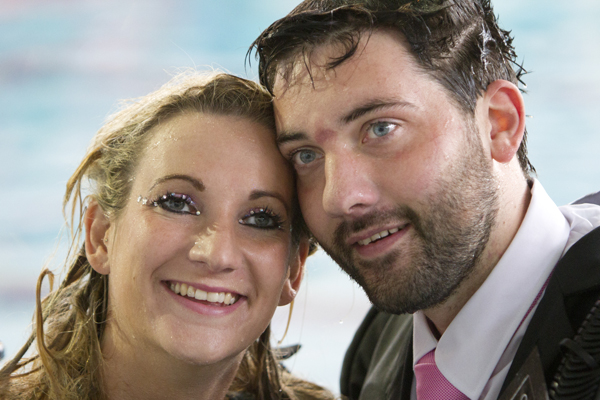
This post will look at venues available for weddings, and look at which is better – traditional or unusual. After watching an episode of BBC 3’s ‘Don’t tell the bride’, I was surprised to discover the varied venues that were considered. In this particular instance (or moment of insanity), the groom picked Spelthorne Leisure Centre pool in Staines, planning an underwater wedding.

Image

(Image taken from getsurrey.co.uk)

I think it’s fair to say that this was a day that the bride and groom and the guests would never forget, but does an unusual venue make an event any better? Or are we better off sticking to tradition?

Bowdin et al (2011) states that the event manager can ‘exploit the surroundings and characteristics of the venue to enhance the event experience’. This means that a successful events manager must be resourceful and make the most out of the venue.

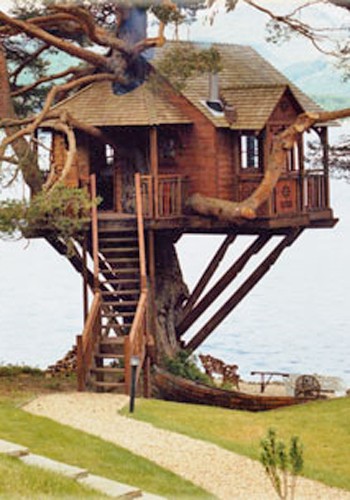
Stylist magazine uncovered another weird and wonderful venue – The Treehouse.

Image

(Image taken from stylist.co.uk)

This amazing treehouse is located in Scotland overlooking Loch Goil. It accommodates 24 people for intimate wedding ceremonies and civil partnerships. Definitely different, but it seems to me like more of a childrens fantasy then a serious wedding venue. The bride and groom would have to compromise on numbers if they decided on a venue like this with such a small capacity. However this venue is only for the actual ceremony not the wedding reception so more guests could come later in the day.

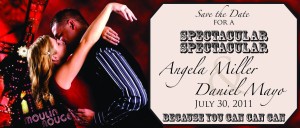
Goldblatt (2008) emphasised the importance of the entrance and reception area of an event in establishing the event theme. Although Goldblatt was not directly referring to weddings, this thought process is still applicable. In my mind a wedding should be a traditional and classy event, and not an excuse to hire out a crazy venue! Although the guests would obviously know they were at a wedding, but the theme of the venue can set the tone of the day. For example bridal website rebelliousbrides.com gives advice on how to put on a Moulin Rouge themed wedding, and in my opinion thats an amazing theme for a birthday, but definitely not for a wedding.

Invite1.ai

(Image taken from lisaludesigns.com)

However wedding website forbetterforworse.co.uk sells this experience by claiming that your wedding day is special anyway so why not opt for a more unusual venue to make the day ‘bigger and more special’. I suppose it all comes down to the happy couple and their personalities.

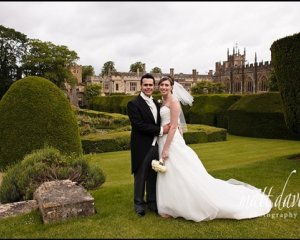
Another side of this debate is cost. The fact that traditional venues such as Sudeley Castle in the Cotswold Hills do not disclose the price unless you enquire tells you that it will be pricey. Although if you have money to splash then it looks well worth it.

Image

(Image taken from weddingvenueprices.com)

Maybe the wedding industry is simply establishing itself in the 21st century, or maybe couples are getting more adventurous, either way it seems that the new trend is to wed in the most unusual venue possible. Personally I would rather stick to tradition, but you never know what they will come up with next!


References:

Bowdin et al 2011, Events Management, 3rd Ed, Elsevier Ltd, Oxford, Pg495-497

http://www.getsurrey.co.uk/news/g/2122039_dont_tell_the_bride_wedding_goes_swimmingly (accessed on 03/12/12)

http://www.stylist.co.uk/life/unusual-wedding-venues#item-1 (accessed on 03/12/12)

http://www.forbetterforworse.co.uk/unusual.htm (accessed on 03/12/12)

http://www.weddingvenueprices.com/venue/sudeley-castle.php (accessed 04/12/12)

http://www.rebelliousbrides.com/2011/07/rebellious-idea-moulin-rouge-wedding.html (accessed on 04/12/12)

http://www.lisaludesigns.com (accessed 04/12/12)

Crowd control

After some friends of mine went to Warehouse Project in Manchester over the weekend, it made me think about crowd control and the regulations involved.

Image

(Image taken from fabulous travel guide)

The purple guide states that ‘The safety and enjoyment of people attending a music event will depend largely on the effective management of the crowd’. It also claims that not only is the quantity of the crowd important, but understanding the behaviour and various factors that affect them. A large crowd can increase the chance of an incident occurring with the potential for a large number of casualties.

Silvers (2008) states that issues with large crowds include crowd surges, trampling, crazes and panics. This is a high risk when dealing with large amounts of people who are likely to be intoxicated.

The main elements of crowd control are ingress – arrival flow rates. This can be a lengthy process when considering venues like Warehouse Project who have a cut off time of entry, therefore queues are longer and the arrival of people is not staggered. Other main elements of crowd control are circulation – facilities planning and communication systems, and egress – the departure of the crowd and emergency exits. Other considerations include design, information and management.

Crowd safety is primarily a management responsibility. Organisers should have a health and safety management system which anticipates, monitors and controls potential crowding risks. HSE states that a crowd safety team needs ‘clear roles and responsibilities, written arrangements for the regular analysis, planning, inspection, operation and review of crowd safety systems and adequate training’.

Silvers (2008), states that successful crowd control should have admission controls barriers, layouts and controlled perimeters, communications, restriction of behaviour and security and stewards.

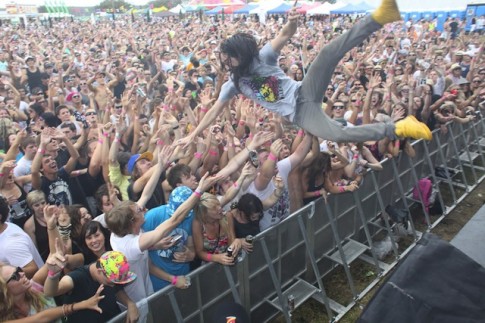
Event organisers can judge crowd dynamics by looking at the character of the artist of group performing, audience profile and crowd activities. For example if the artist has a reputation for stage diving or inviting the audience to join them on stage, the organisers will know to implement more security and barriers near the stage.

Image

(Image taken from Elite Daily)

Crowd control is one of the most important considerations for large scale events. In some cases inefficient crowd control has resulted in death, for example the free Fatboy Slim beach party known as the Big Beach Boutique was prepared for 60,000 people, however when 250,000 people arrived the organisers could not control them. This resulted in 3 people dying and many others injured.

Another example of how inadequate crowd control can turn into tragedy is Hillsborough 1989. In this incident the official cause of the disaster was given as the failure of police control, putting that into a context it means that crowd control was the focus and crowd safety was not. 96 people died and 750 people were injured with a further 36 sustaining injuries outside the ground.

HSE states that the following could lead to overcrowding and possible injury:

  • steep slopes,
  • dead ends,
  • locked gates,
  • convergence of several routes into one,
  • uneven or slippery flooring or steps,
  • reverse or cross flows in a dense crowd,
  • flows which are obstructed by queues or gathering crowds.

However if event organisers take all of these points into account and ensure that the risk is reduced, they should be able to move forward with a safe event.

There are external sources used for crowd control management such as The Event Safety Guide, and HSE document ‘Managing Crowds Safely’. Internal documents must also be kept such as a risk assessment, security plan, event manual and health and safety policies.

This highlights the importance of crowd control, and hopefully the industry has learnt from its mistakes and further tragedy will be avoided.

References.

HSE (1999), The Event Safety Guide, 2nd Edition, Crown, London

Silvers (2008), Risk Management for Meetings and Events, 1st Ed, Elsevier Ltd, Burlington

http://elitedaily.com/elite/2012/biggest-fails-stage-diving-history/ (accessed on 25/11/12)

safeconcerts.com (accessed on 25/11/12)

http://fabuloustravelguide.com/2010/10/the-warehouse-project-comes-to-london/ (accessed on 25/11/12)

http://www.hse.gov.uk (accessed on 25/11/12)

Catering for the Christmas Markets – Risky Business?

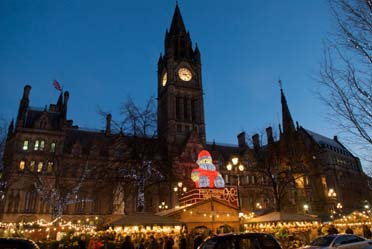
After visiting the Christmas markets this week, I decided to have a look at the procedures for catering at an outdoor event of this scale.

Image

Goldblatt (2002) claims that ‘Food beverage, and celebration are inextricably connected. From social lifestyle events to giant hallmark events such as the Olympic Games or Super Bowl, the relationship between food and frivolity has been a close one’. This highlights the importance of catering for such an event to ensure that it is a success. 

The food hygiene regulations (2006), state that all proprietors of food businesses must put in place food safety management procedures based on the principles of HACCP – Hazard Analysis Critical Control Point. HACCP is a way of managing food safety. It is based on putting in place procedures to control hazards such as identifying the “critical control points” – these are the areas you need to focus on to prevent hazards or reduce them to an acceptable level. These areas include cross contamination, cleaning and cooking. This regulation is imperative as it makes sure that the consumer is protected, and reduces the risk of the caterer being fined or even imprisoned if something goes wrong.

There are also many considerations when deciding to hire external caterers for an outdoor event. The event organiser needs to consider the quality and variety of food available, this is especially important for the Manchester Christmas markets as this is one of its main selling points. The website states that customers can ‘treat yourself to anything from Dutch mini pancakes, to Hungarian goulash to Spanish paella to French profiteroles’.

Other considerations include the reputation of caterers, how many stalls they have room for, and where to put which caterer as this may affect trade and cost of the space.

However if all of these procedures are followed correctly, the event will run smoothly and the Christmas markets should be running for a long time to come!


References:

http://www.christmasmarkets.com/UK/manchester-christmas-market.html (accessed on 21/11/2012)

http://www.cieh.org/uploadedFiles/Core/Policy/Publications_and_information_services/Policy_publications/Publications/CIEH_Outdoor_Mobile_Catering_Guidance_Final_Consultation.pdf (accessed on 22/11/2012)

Goldblatt 2002, Special Events – Twenty first century global event management, 3rd Ed, Pg 153


Baby you’re a firework!

As it is bonfire night tomorrow, I thought I would look at the procedures for putting on firework displays, and the regulations surrounding them.

Image

With events in Manchester at sites including Platt Fields Park and Heaton Park, the numbers will be rolling in to celebrate. HSE states that any outdoor display must be conducted by a ‘competent display operator.’ It also specifies that a competent display operator must understand ‘the principle of carrying out a risk assessment,’ and ‘the requirements of health and safety legislation, which apply to the activities of a firework display operator, and firework displays.’ This operator must also have relevant training and practical experience.

Image

This is just one of the many laws that HSE have implemented to ensure that events with fireworks are as safe and controlled as possible. But is it enough? It would seem not. An article in Manchester Evening News wrote about a teenage girl who was injured by a firework at a public event, after it landed in her lap while she was sitting in her wheelchair. This could have possibly been prevented if the fall out area and safety area was bigger, meaning the spectators would have been further back. This kind of incident could have a major effect on future events such as bad press, legal action being taken against them and the event being shut down.

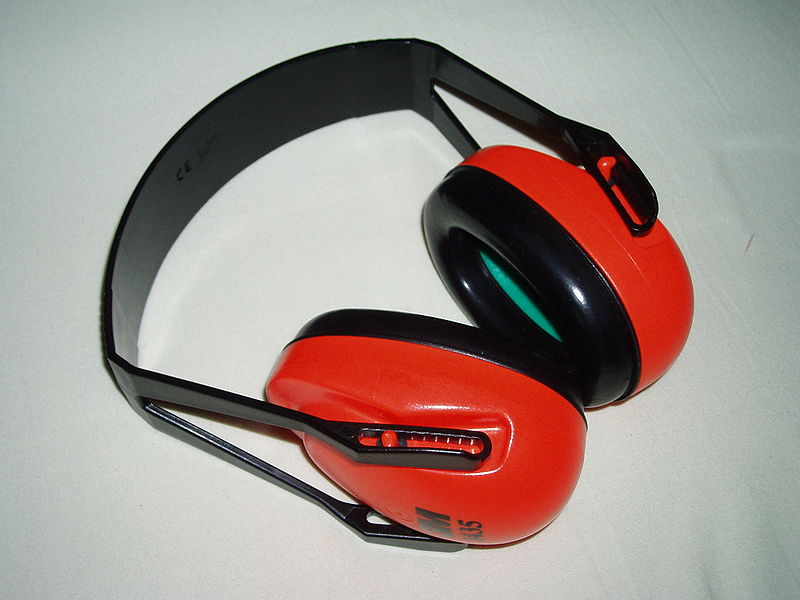
Another issue with this type of event for employers to consider is protecting the employees. This comes under noise regulations. ‘The Control of Noise at Work Regulations’ (2005), came into force for all industry sectors in Great Britain on 6 April 2006. The aim of the Noise Regulations is to ensure that workers’ hearing is protected from excessive noise at their place of work, which could cause them to lose their hearing and/or to suffer from tinnitus (permanent ringing in the ears).’ If these rules aren’t followed it could also have a big impact on the event. For example employees could refuse to work at the event in the future, or if they sustain injuries or negative effects they could take legal action.

Image

I guess we will just have to wait and see if the event organisers have upgraded their Health and Safety procedures and hope that tomorrow night will be a safe and fun event for all!

References:

http://www.southlakeland.gov.uk/pdf/Firework%20Displays.pdf (accessed on 04/11/12)

http://menmedia.co.uk/manchestereveningnews/news/s/1592835_greater-manchester-fire-service-posts-live-online-updates-of-every-incident-on-bonfire-weekend (accessed on 04/11/12)

http://www.hse.gov.uk/noise/regulations.htm (accessed on 04/11/12)

Buffets at weddings – cheap or cheerful?

After watching an episode of TV series ‘4 weddings’, where 4 brides judge each others weddings in a bid to win a luxury honeymoon, I was quite surprised to see that most of the criticism wasn’t on the wedding dress, but the food. One of the brides stated that having a buffet at her wedding would be her ‘worst nightmare’.

This got me thinking, is it acceptable to have a buffet at your wedding, or should guests be waited on hand and foot?

Bowdin et al (2011), claims that catering can be ‘the major element in staging, depending on the theme and nature of an event’. Although Bowdin was not directly referring to weddings, this point fits in with the opinions of the 4 brides on the TV show and is still relevant. Other considerations when making this decision is number of staff. Bowdin also states that at a formal dinner, staff are usually on a ratio of 1:10 (one member of staff to serve 10 customers). If this amount of staff were unavailable or out of the price range, the bride couldn’t be blamed for choosing the buffet option.

First of all I think money is a big factor. On a wedding forum, I wasn’t surprised to see many comments about buffets being the cheapest and therefore most realistic option when compared to a sit down meal. However others stated that they would rather pay extra to give their guests a sit down meal to avoid being branded ‘tacky’ or ‘cheap’. I did however come across tips for how to budget for a sit down meal. So is there really any excuse?

I must admit, I initially thought that a buffet would be tacky and a bit cheap looking. However my opinion was swayed when an article in The Huffington Post investigated the new trend of ‘candy buffets’.

Image

This was voted a top wedding trend by Yahoo! in 2011, with the opinion that ‘candy never goes out of style’.

Image

I think you’ll all agree that it looks impressive, but is it a realistic substitute for a wedding breakfast? Or should it just be a pretty display to catch peoples eye?

Well it seems to be catching on, and I think if more buffets looked like this, then maybe we would start to associate them with chic weddings rather than cheap school discos. Of course its a matter of personal preference, some people might enjoy school discos..

References:

Bowdin et al, 2011, Events Management, Elsevier, Oxford.

http://www.weddingwire.com/wedding-forums/buffet-vs-sit-down/a74093688c5904bf.html (accessed on 29/10/12)

http://www.huffingtonpost.com/2012/09/06/candy-buffet-wedding_n_1862048.html (accessed on 29/10/12)

http://www.wikihow.com/Budget-for-a-Sit-Down-Wedding-Dinner (accessed on 29/10/12)

http://voices.yahoo.com/candy-buffets-6682048.html (accessed on 29/10/12)

Molecular Gastronomy – Here to stay?

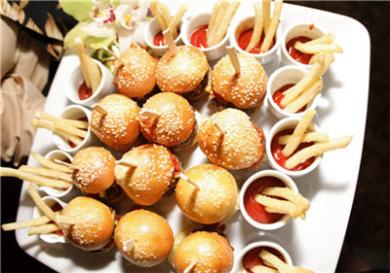
There are always new trends on the catering scene, we’ve seen mini versions of full sized meals aka ‘mini foods’ (as seen below) and now molecular gastronomy seems to be making its mark on the catering world.

Image

(Image taken from http://weddingtrend2012.blog.com)

So what is molecular gastronomy?

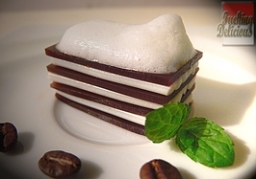
To put it simply it is experimental cooking. It can range from anything to ‘coffee lasange’ with milk foam,

Image

To carrot and ginger caviar..

Image

However it isn’t as complicated as it sounds, well for a professional chef anyway, it can be as simple as using a carbon dioxide source for adding bubbles and making foam, using liquid nitrogen for flash freezing, and combining sweet and savoury flavours to make unusual pairings.

Admittedly it looks impressive, but is it just another foody phase?

Well celebrity chef Heston Blumenthal certainly seems to think so. In an article in The Observer titled ‘Molecular gastronomy is dead’, Blumenthal expresses his opinion on the movement. He believes that the term creates artificial barriers. ‘Molecular makes it sound complicated,’ he says. ‘And gastronomy makes it sound elitist.’

So is it here to stay? Well if you have time and money to burn then it would be perfect for entertaining guests. However in our current economic climate I think it’s safe to say that this is only realistic for a very specific target market. Well I guess all we can do it wait and see!

References:

http://weddingtrend2012.blog.com/2011/09/26/10-wedding-trends-that-are-passe-and-what-to-try-instead (accessed on 14/10/12)

http://observer.guardian.co.uk/foodmonthly/futureoffood/story/0,,1969722,00.html (accessed on 16/10/12)

Design a site like this with WordPress.com
Get started